For some young people, learning happens most naturally when it starts with something they already care about.
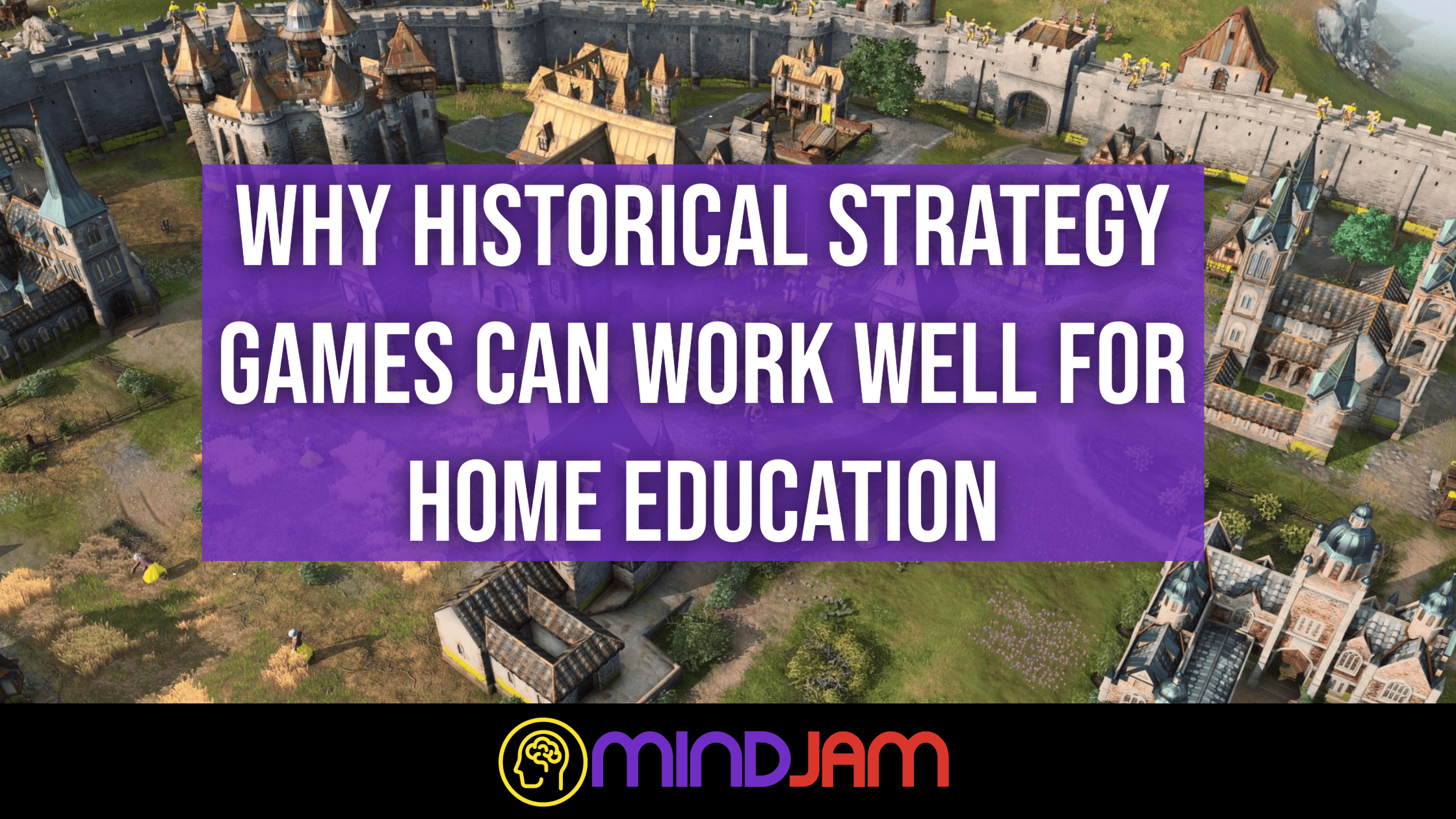
Historical strategy games such as Age of Empires can be a good example of this. They bring together history, planning, systems, problem-solving and experimentation in a way that feels very different from sitting down with a textbook.
That does not mean every part of the game is historically accurate, or that playing it automatically replaces more formal learning. What it can do is create curiosity – and that curiosity can lead somewhere useful.
History as something to explore
Age of Empires places players inside versions of historical periods, civilisations and conflicts. Rather than only reading about a battle or a ruler, they are making decisions within a simplified model of that world.
That can prompt questions naturally.
Why did this civilisation have access to certain technologies? Why was a particular resource important? Did this battle really happen like this? What was happening elsewhere in the world at the same time?
Those questions can become the starting point for wider learning. A young person might move from the game to a documentary, a map, a book, a museum visit or a conversation with an adult – not because they have been told to study the topic, but because they genuinely want to know more.

Learning through systems
Strategy games are built around systems.
Players gather resources, make choices about where to invest them, build settlements, manage competing priorities and respond when their original plan stops working.
There is rarely one perfect answer. A strategy that works in one situation may fail in another.
That creates lots of opportunities to practise planning, adapting and thinking ahead. It also gives players immediate feedback. If a decision does not work, they can change approach and try again.
Some neurodivergent young people particularly enjoy learning through clear systems and cause-and-effect relationships. Others simply enjoy the challenge. Either way, the learning is happening within something they have chosen to engage with.

Following an interest rather than turning it into work
When a young person develops a strong interest in a game, it can be tempting to immediately turn that interest into a lesson.
Sometimes that works. Sometimes it is the quickest way to make the interest less enjoyable.
A gentler approach is often to notice what is already happening.
Are they talking about particular civilisations? Comparing different military strategies? Working out how resources affect growth? Looking up whether a person or event in the game was real?
Those are already meaningful forms of learning.
An adult can offer somewhere for that curiosity to go without taking ownership of it. You might leave a relevant book nearby, watch a documentary together, look something up when a question comes up, or visit somewhere connected to the period they are interested in.
The game remains theirs. The learning grows around it.

Building, planning and experimenting
Historical strategy games also allow a lot of experimentation.
A player can decide where to build, what to prioritise and how they want their civilisation to develop. They can take risks, make mistakes and restart without real-world consequences.
For young people who experience a lot of adult direction elsewhere in their lives, that autonomy can matter.
They are not completing somebody else’s instructions. They are making decisions, testing ideas and seeing what happens.
Even when the outcome is a spectacular defeat, there is information in it: what went wrong, what might work next time, and whether they want to try again.

History is only part of it
These games can also open conversations about subjects that sit alongside history.
Trade and resources can lead into economics. Maps and terrain connect with geography. Alliances and conflict can raise questions about politics and diplomacy. Technology trees can prompt conversations about how inventions change societies.
There are also useful opportunities to question the game itself.
Whose perspective is being represented? What has been simplified? Which parts are historically accurate and which exist because they make the game more enjoyable?
Learning to ask those questions is valuable too. A historical game is not a neutral account of history – it is somebody’s interpretation of it, shaped by the needs of game design.

What about autistic young people?
There is no single type of game that works for autistic young people.
But historical strategy games can suit some players particularly well because they combine deep subject matter with structured systems, repetition, choice and the ability to play at their own pace.
A strong interest in history, maps, military technology, architecture or systems might make a game like Age of Empires especially appealing. Another young person may have no interest in it at all.
The useful question is less ‘Is this educational for autistic children?’ and more ‘What is this particular young person getting from it?’
If they are absorbed in planning, researching, experimenting, discussing and making connections, there is already a lot happening beneath the surface.

Other games to explore
Age of Empires is only one example.
The Civilization series places more emphasis on developing a civilisation across long periods of time, including science, culture, diplomacy and government.
The Total War series combines large-scale strategy with detailed battles and can be a good fit for players who are particularly interested in military history.
City-building and management games with historical settings can offer another route in, especially for young people who are more interested in how people lived and how settlements functioned than in battles themselves.
The best choice will depend on the young person’s interests, preferred level of complexity and the kinds of play they enjoy.

Final thoughts
Home education does not have to mean recreating school at home.
Sometimes a game can be the thing that opens a door.
A young person starts by trying to win a campaign. Then they want to know who the people in it were. They notice a place name. They ask why one civilisation had an advantage over another. One question leads to another.
That is not a lesser form of learning because it began with a game.
When we pay attention to what young people are already curious about, games like Age of Empires can become part of a much wider process of discovery – without needing to stop being games.